"The doctor of the future will give no medicine but will interest his patients in the care of the human frame, in diet, and in the cause and prevention of disease. "-Thomas Edison

Sunday, March 1, 2015

How What You Eat Affects Your Brain


Neurotransmitters & Nutrition
They say “You are what you eat”.  That statement has a lot of truth behind it.  Neurotransmitters are messenger molecules produced by the body to communicate and control almost every bodily function.  Many are made from the nutrients in our diet.  Amino acids & B vitamins from the food we eat are building blocks to these neurotransmitters.  3 of the most important neurotransmitters are Dopamine, Norepinephrine (NE), and Serotonin.  Dopamine is associated with pleasure & reward.  Low levels of Dopamine are associated with ADHD, Parkinson’s, depression, and addictions.  High levels of Dopamine are associated with mania, psychosis, and schizophrenia.  It is a precursor to NE.  Good sources of Dopamine include chicken, turkey, fish, almonds, avocados, cheese, yogurt, pumpkin seeds.  NE is released from the sympathetic nervous system and is responsible in part for the flight or fight response.  Serotonin is associated with well- being & happiness.  It regulates sleep & appetite.  Good sources for serotonin are bananas, papayas, dates.  

Blood Sugar, Brain & Behavior
Glycemic index (GI) is a measure of how much and how quickly a food will raise blood glucose.  High GI foods include refined grains, potatoes, and sugary foods.  Low GI foods include beans, fat-free dairy, some fruits, and barley.  The human brain uses glucose as fuel.  Decreased blood glucose can cause impatience, irritability & aggressiveness.  Self-control requires adequate levels of glucose in brain.  Stevia is 300x sweeter than glucose, but will lower blood glucose and can decrease carb cravings.  Psyllium absorbs excess glucose, fat & water in gut.  

Stress-Related Eating & Appetite
Cortisol is the main hormone associated with chronic stress.  Cortisol levels are increased with lack of sleep, excessive exercise & restrictive dieting.  Cortisol elevates blood glucose levels, and causes increased cravings for sweet, salty & fatty foods.  Effects of chronic cortisol elevation can be lessened by omega-3 supplementation.  

Inflammation & Mood
Inflammation in the body is a response of the vascular system to harmful stimuli.  Acute inflammation is a good thing; it helps you heal from injury.  Chronic inflammation is detrimental; it results in an increased cortisol level, which can suppress the immune system.  Increased stress increases cortisol which can increase depression & memory problems.  Anti-inflammatory nutrients can ward off these problems.  Generally those foods are associated with the Mediterranean diet: fruits, vegetables, fish, walnuts, flax & whole grains, sage, ginger, chili peppers, black pepper, green tea, red wine, and dark chocolate.  Omega 3 fatty acids are called nature’s natural anti-depressant, and are only found in our diet.


In conclusion: the nutrients we put in our mouth have a direct relationship with how our cells communicate, particularly how our brain functions.  Those nutrients can affect our cravings, our mood and our immune system.  There are no empty calories; every single one has some influence on how we function as a system.

-Bethany, PT, ATC

Curcumin's benefit, add it to your diet.

Curcumin (Tumeric) is a food and supplement that boasts several healthy effects. Its benefits include: 
-Supporting health joint function
-Promoting skin health
-Improving digestion
-Maintaining cholesterol levels
-Promoting healthy blood and liver functions
Curcumin’s antioxidants:
-Support memory function
-Promote heart health
-Support the immune system
-Protect cells from free radical damage
-Support body against stress
Consider adding Curcumin as a supplement to your diet. The benefits are numerous and the side effects very few. Check with your doctor if you question if Curcumin is right for you.

-Deb, Owner, PT

Keep Shoulder Pain Away!

In 1995, a study by Sher (not the entertainer!) using MRI’s showed that 34% of all the individuals (and 54% over age 60) in the study demonstrated rotator cuff tear(s). 11 years later, a study by Yamaguchi, using diagnostic ultrasounds, found that number to be 36% of the population having rotator cuff tears.  In general, studies have shown that 30-50% of the population over 50 years of age have either a partial or full thickness tear of one of their 4 rotator cuff muscles.   

These numbers are rather significant, however, many of these individuals do not have any symptoms.  Those who do have rotator cuff injuries understand the significance of their injury, as well as how limiting it can be on their daily lives. The key to good rotator cuff health is posture and strength.  

I like to always start my posture education by breaking my patient's days into thirds. 1/3 of your day you sleep, 1/3 you work, and 1/3 you do whatever you want to do (generally speaking, excluding our retired patient population!). If you can tweak the 1/3 of your day that you sleep (to put yourself in better positioning), that can play a large role in how your shoulder feels for the rest of the day. I typically recommend sleeping on your back or on your side(s) with your top arm at your side (either with a pillow between your arm and side or with your hand in a pocket). 

At work, I recommend proper posture (easier said than done!). Most people know what this should look like, but we don't always follow this recommendation!  The third of your day that you do whatever you want (outside of work and sleep), we are typically moving around, so it's not as big of an issue unless you have a serious quilting, knitting, or computer hobby that puts you in more of a forward head and shoulder posture.

Once your shoulder is properly positioned with good posture, your rotator cuff should move in a more appropriate manner, and thus limiting fraying that may occur due to impingement-like issues.  You can then begin to build strong rotator cuff musculature.  Most literature shows that the rotator cuff only fires up to about 15 pounds of resistance.  That means, for most people, doing rubber band resistance exercises and light dumbbell strengthening should improve one’s rotator cuff strength and health.  By putting a pillow or a rolled up towel between your arm and side, studies have shown that the rotator cuff fires up to 200% more effectively as compared to not having something between your arm and side.

By working on some basic strengthening exercises you should be able to improve your rotator cuff strength and limit potentially problematic range of motion loss and increased pain later in life.

-Matt, Lead Physical Therapist

Tuesday, July 29, 2014

Pain: Part 2


Have you ever heard the phrase; the pain is all in your head?  This statement may seem cliché, but it is very true.  The key to getting the pain out of your head is having an understanding of what pain is.  People who better understand their pain actually experience less pain.  Most people think that injury and pain go hand in hand.  Once the damaged tissue is healed, then the pain will go away.  But this is not always correct.  Ongoing pain is due to a more sensitive nervous system.  Learning the biological processes of pain is called therapeutic neuroscience education.  It has been shown that teaching people about their pain has both immediate and long-term effects. 

There are many nerves in your body.  They are constantly sending signals to your brain about the surroundings.  When something happens, like you break a bone, your nerves set off an alarm telling your brain to address the problem and avoid further injury.  This alarm is pain.  As the bone heals, the alarm should decrease.  You will still feel pain for the next few weeks but normally it will gradually subside.  In one in four people, though, the alarm stays firing and the pain remains after the tissues have healed.  The nerves are extra sensitive.  The slightest movement will lead to pain so you think that there must be another injury somewhere. 

The point of therapeutic neuroscience education is to teach people that the chronic pain they feel is due to extra sensitive nerves, not tissue damage.  Focusing on strategies that help calm down your alarm system can help you regain movement, experience less pain, and return to normal function.


Wednesday, July 16, 2014

Pain: Part 1

There are three stages of pain.  First there is immediate pain, which is felt right after an injury.  It is the body’s natural response that protects itself from dangerous situations.  This type of pain is useful because it encourages us to stop doing something that may harm our body.  Acute pain occurs in the days and weeks following an injury.  This pain can range from mild discomfort to severe pain.  After the injured area heals, though, this pain subsides.  If there is still pain after the injury heals this is considered chronic pain.  This type of pain often affects both physical and emotional well-being as it is very long lasting.  In some cases it may never go away but it can be reduced with medication and treatments. 

For small aches and pains, a lifestyle change may be what you need to feel relief.  Posture plays a big role in lower back pain.  Often focusing on maintaining better posture can alleviate pain.  Your diet may also be a factor contributing your pain.  It is important to stay hydrated and eat a balanced diet. 

Massages have also been shown to relieve pain.  They increase blood circulation and reduce tension, making it a good treatment for chronic pain patients. 

Many doctors will recommend physical therapy after an injury or for someone with chronic pain.  Therapists help in several ways to aid in pain relief.  They provide exercises to strengthen the weak muscles and to improve range of motion.  They will also break down scar tissue and reduce inflammation.  The body can get stiff after suffering an injury, which can make it harder to move.  It is important to prevent or reduce this stiffness so it doesn’t cause additional pain.
 
Hydrotherapy can be especially helpful in treating patients with chronic pain because it takes some weight off of the affected area.  Physical therapy can help restore function and can allow you to return to your day-to-day activities.   

TENS therapy is useful in treating acute and chronic pain.  TENS stands for transcutaneous electrical nerve stimulation.  It uses low-voltage electric current to help block pain signals that your body is sending to your brain.  Many people find some relief from this form of therapy.

Tuesday, July 8, 2014

Fascial Therapy


Fascia is everywhere in the body.  It is a continuous sheet of connective tissue that is made up of densely packed collagen fibers.  It separates different layers of tissue and encloses each muscle, therefore decreasing the friction between muscles as they contract.  There are three main types of fascia, superficial, deep, and visceral.  Each type is named for its location in the body.  Superficial fascia is under the skin, deep fascia surrounds muscles, and visceral fascia encloses organs.  These tissues connect everything in the body.  They provide support for the skin, muscles, and organs.
Fascial tissue can get restrictive, like clothing that is too small, and it needs to be released.  This is where fascial therapy comes into play.  Therapists focus on the deep muscular fascia.  They release the tension on the fascia by various methods that tug and stretch it.  This tightness is a result from stress being placed on the body.  When fascia gets tight, it starts pulling on other structures.  Since it is continuous, pulling on one part of the body can affect the entire body and cause pain.  Fascial therapy is a way to relieve the pain from this tension.  It can help with strength, range of motion, and decreasing pain.

The Fat Abrasion Tool is what Agape Therapy uses to treat fascial tension.  It can help restore function and relieve pain.  Learn more about the F.A.T Tool on our website http://www.agapetherapy.com/page.aspx?n=Physical%20Therapy&sn=FAT%20Tool

Tuesday, July 1, 2014

Visceral Mobilization: The Missing Puzzle Piece

Viscera: The internal organs of the body, specifically those within the chest (like the heart or lungs) or the abdomen (like the liver, pancreas, or intestines)

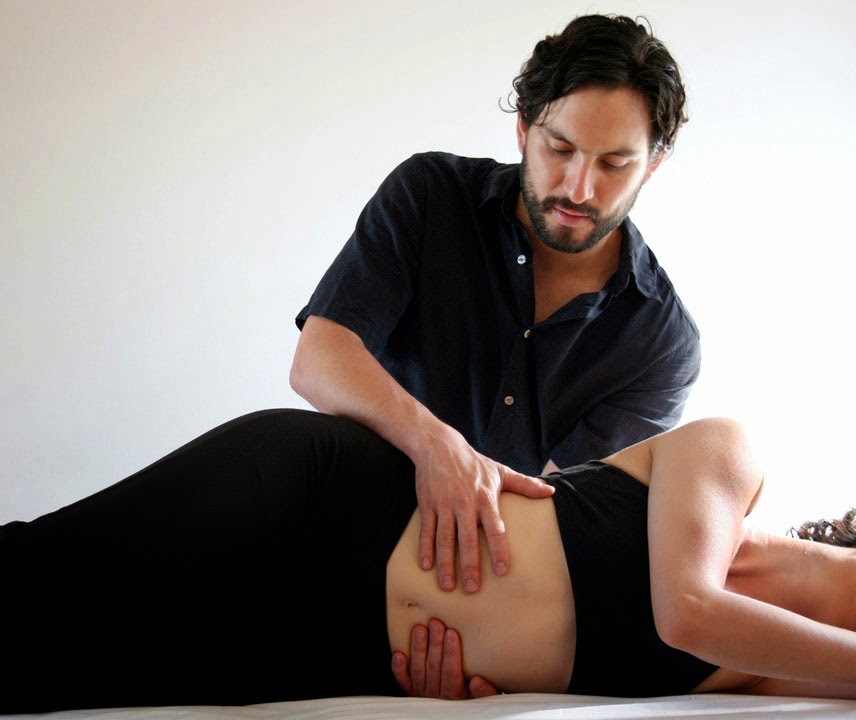
A healthy organ is vital for proper function of the body.  Organs are supposed to be able to move around in the membrane that surrounds them.  If there are any restrictions, such as adhesions to another structure, the function of the organ will be impaired.  The natural motion an organ goes through thousands of times a day will then cause strain on the organ because of the restriction.  The organ will react by changing its motion, compromising some of the function.  Visceral manipulation is a method used by Physical Therapists to bring improvement to the function of an organ by restoring the proper motion.  It involves specifically placed hands over restricted areas in the abdomen that encourage normal movement of an organ.  Sustained pressure against the restriction helps relive it.

Visceral techniques can often provide a solution to a patient’s chronic pain that treatment of the musculoskeletal system alone could not relieve.  This is because the restrictions mentioned earlier can interfere with the spine, pelvis, ribs, or other parts of the skeleton.  This causes bending and twisting of the skeleton, which changes posture and puts additional stress of the body.  Over time, even the smallest change can cause wear and tear on the body, leading to pain.  The location of this pain may be far away from the organ that is causing the original problem.  This can make it hard to diagnose because the musculoskeletal pain distracts away from the source of the pain.  If you suffer from chronic pain and musculoskeletal therapy isn’t helping, the missing piece of the puzzle may be located within the viscera.

If you have any questions about Visceral Mobilization, email avanarkel@agapetherapy.com

Tuesday, June 24, 2014

Feeling Stiff in the Morning?

Does it take you a long time in the morning to get up and feel loose enough to start your day?  You’re not alone.  Stiffness or tightness in your back in the morning is a much more common complaint then you may think.  There are a variety of causes including poor sleeping habits, a lack of physical activity, and poor posture.  If you are over the age of 35 your back stiffness could be an indication that you have arthritis in your spine.  Whatever the cause, here are some tips to help alleviate your stiffness.

  • ·      Perform the following stretches each morning while you are still in bed.
o   Hug your knees to your chest so you are in a ball.  Repeat a few times relaxing in between.
o   Reach and extend your arms up above your head. Relax by bringing your arms back to your side and the repeat several times.
o   Lie on your back with both knees bent and feet flat on the floor.  Slowly move knees 2-4 inches to the side then return to the center.  Repeat a few times on each side. 
  • ·      Strengthening your abdominal and postural muscles can help relieve pain. Standing with good posture is very important because it removes unnecessary stress on the spine.
  • ·      Take a hot shower to warm up your muscles and joints.
  • ·      Avoid lifting heavy objects in the morning.
  • ·      Make sure you have a good mattress that supports your back.  If you’ve had it for more then 10 years it may be time to shop for a new one.
  • ·      Follow a regular exercise plan.  It doesn’t have to be fancy, even going on a walk every day can improve stiffness.


Tuesday, June 17, 2014

Random Knee Pain

The knee joint holds a majority of the body’s weight.  It is comprised of several different structures including bones, ligaments, tendons, cartilage, and bursa.  The bones that form the knee joint are the femur, tibia, fibula, and the patella.  Ligaments are dense fibrous bands that connect bone to bone.  In the knee joint, they connect the femur to the tibia.  There are four ligaments within the joint and they all help stabilize the knee.  Tendons are similar to ligaments but they connect muscles to bones.  The tendons in the knee are located on the front of the knee and help with straightening the knee.  The cartilaginous structures in the knee are called menisci.  They are located between the bones and form a cushion for the bones.  Lastly, bursa are fluid-filled sacs that also help cushion the knee.

As you can see there are many structures that make up the knee joint.  When one of them is out of place or not functioning correctly, the additional stress causes pain in the area.  This pain can affect daily living because the knee is a major weight bearing joint.  Here are some simple exercises to perform that can help relieve random knee pain. 

Flexibility helps decrease the risk of injury by lowering the stress placed on the knee.  The following stretches can help with knee pain.   Hold each for 10-30 seconds and repeat 3-4 times each leg.

1.     Hamstring Stretch: Lie on your back with one leg flat on the floor. Bend your other leg for support.  Loop a towel around your foot and pull your leg toward your chest keeping a slight bend at the knee. 


2.     Calf Stretch: Stand facing a wall, extend one leg straight behind you. Lean into the wall while keeping your heel on the ground. 


Strengthening the muscles around the joint protects you from injury by stabilizing the joint and decreasing the amount of stress on the knee.  Do each of these exercises 10-12 times, at least once a day.

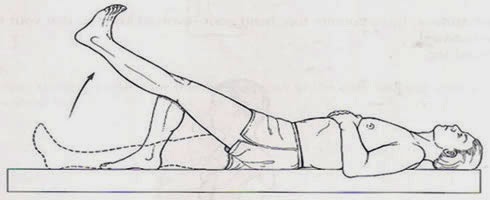
1.     Straight Leg Raise:  Lay with one leg straight and one leg bent for support.  Slowly lift the straight leg 12 inches off the ground and lower it back down.  Repeat with the other leg.


2.     Leg Extensions: Sit on a chair with your feet resting on the ground.  Straighten one leg at the knee and slowly bring it back to the ground.  Repeat with each leg. 


3.    Side Leg Raise: Lie on your side with your legs straight and together.  Keeping your body straight, lift your top leg to shoulder height and slowly lower back to the starting position.  Repeat with the other leg.


4.     Step Ups: Using a staircase, step up with one foot, and then slowly lower back to the ground.  As you step up your knee should be directly over your ankle.  Repeat with the other leg.


5.     Mini Squat: Stand with feet hip width apart and with toes pointed forward.  Bend slightly at the knees only lowering a few inches.  Then return to standing position.  Make sure your knees stay behind your toes.


6.     Low impact activities like biking, swimming, and water aerobics are a good option because they put less stress on the joint.